As an introduction to still image (Photography) we looked at artists who specialise in portraits in roder to get inspiration for our own photographs. We first looked at Laurie Simmons, she is an American artist, photographer and filmmaker. Since the mid-1970s, Simmons has staged scenes for her camera with dolls, ventriloquist dummies, objects on legs, and people, to create photographs that reference domestic scenes. I particularly like her 'How we see' 2015 project (figure 1) where he has a variety of models showing all different facial expressions in the form of close ups in front of a bright coloured background. This collection of images is very intriguing and eye-catching.

Figure 1
We then looked at Weegee's photographs, Weegee worked in Manhattan, New York City's Lower East Side, as a press photographer during the 1930s and 1940s, and he developed his signature style by following the city's emergency services and documenting their activity.Much of his work depicted unflinchingly realistic scenes of urban life, crime, injury and death (Figure 2). Weegee published photographic books and also worked in cinema, initially making his own short films and later collaborating with film directors such as Jack Donohue and Stanley Kubrick.

Figure 2

Figure 3
After looking at some artists and their work we were set a task of experimenting with our own portraits. We tested a variety of different ways in which you can capture potraits both groups and individual portraits. We also looked at different backgrounds and lights that can change the whole dimension of an image. These were some of the seetings used to take out images that I learnt from the session...


Week 2:
We went to central london to visit three photography galleries, Amanda Wilkinsom gallery, Firth street gallery and Richard Saltoun Gallery. Out of the three galleries we visited, the one that interested me the most was 'women look at women' at the Richard Saltoun gallery (figure 4). Out of all the galleries, this particular collection of images in this gallery was extremely intriguing. In my opinion Saltoun wated to display images specifically about women looking at themselves and other women through the camera lens and challenging what we see because women are always being categorized.

Figure 4
This image by Rose English (Figure 5) shows a young woman on top of a bed, wearing an enormous horse’s tail. With her hair perfectly tied and her ribs protruding through her narrow, bare back, there’s something suggestive about these poses, but also comfortingly subversive and surreal. It’s a great example of more obscure images that feed into an established practice, as English is celebrated for her performance and video works that obsess over equine movement.
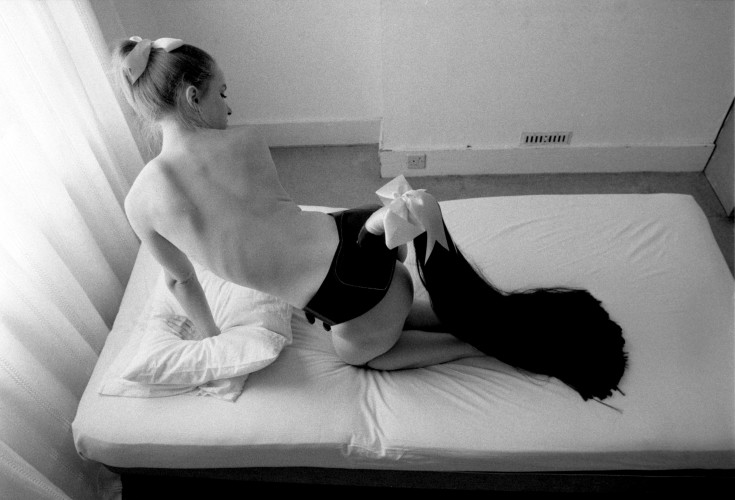
Figure 5
In this image by Alexis Hunter (Figure 6) twenty hand-coloured images depict the point of view of a woman poised at a typewriter before she begins to fiddle with a small globe. As she tears the object apart her hands become cut and bloodied, in a frustrating and seemingly pointless act. This form of aggression alludes to the stifling professional confines many women endured during the seventies (and remain relatable today) and also hint at forms of mania that have often been aligned with female emotions.

Figure 6
Homework Task:
I partnered up with my friend Arnold and we decided to choose street photography as our theme. We used Arnold's friend as a model and after gaining inspiration from artists we looked at during this topic we decided to constantly switch scenary and capture diffefrent emotions from our model. We also varied our shots including, mid shots, long shots and close ups. We decided to keep editing minimal as sometimes it can distract the audience froim the meaning of the picture. Therfore we only brightened tones and blurred backgrounds in order to have constant focus on the model. Overall, I was very happy with the shoot and feel as though the pictires came out as planned.

Final image of the shoot:

This was my favourite image from the shoot. I kept the editing simple and lowered the depth of feild in the background keeing all emphisis on the model. The emotion on his face also tells his own personal story, leaving it with the imagination of the viewer.


